
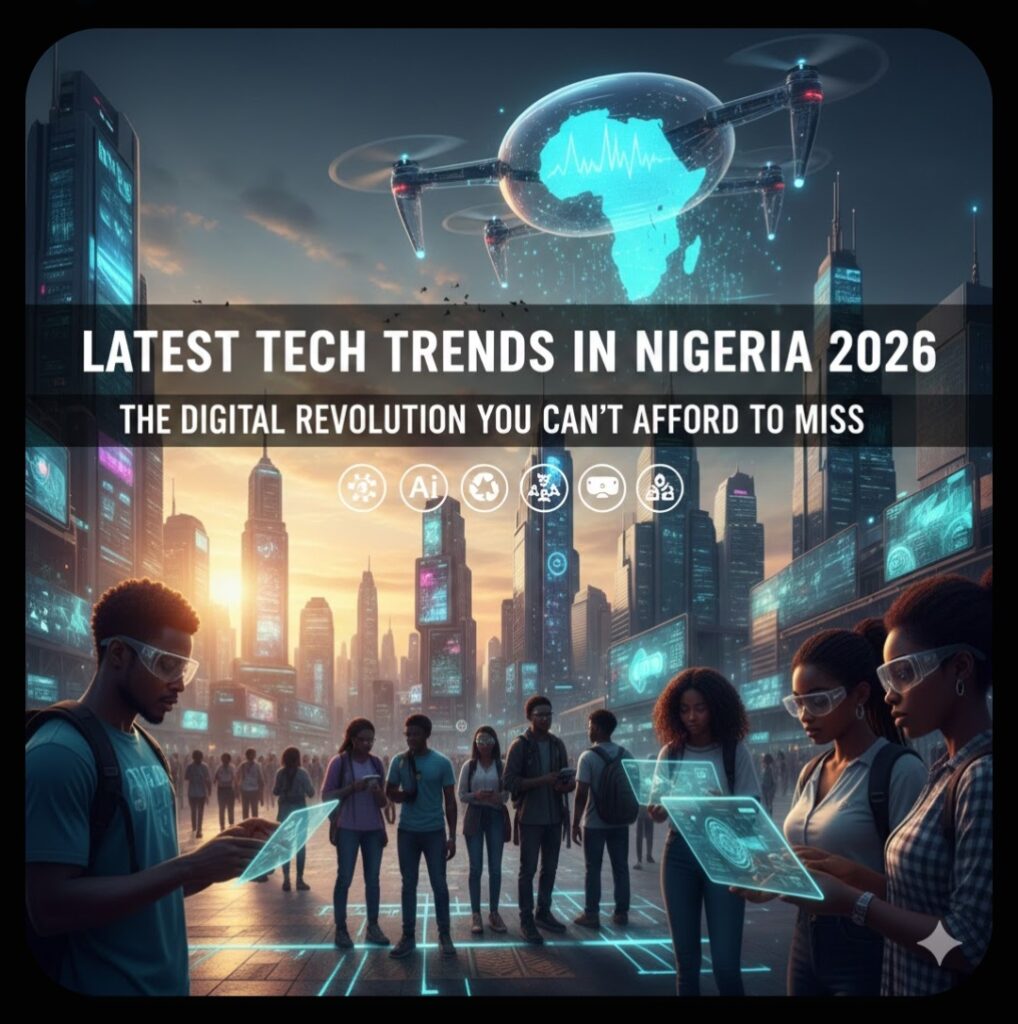
You know what’s wild? While the world’s been sleeping on Africa’s tech scene, Nigeria has quietly been building something extraordinary. I’m talking about a digital revolution that’s not just catching up with the West—it’s leaping ahead in ways that’ll make Silicon Valley sit up and take notice.
Picture this: Lagos, a city of over 20 million people, where traffic jams last longer than some Netflix series, transforming into a tech powerhouse that’s attracting billions in investment. Abuja, the capital, sprouting innovation hubs like wildflowers after rain. And across the country, from Port Harcourt to Kano, young developers, entrepreneurs, and innovators are building solutions that don’t just copy Western models—they’re creating entirely new playbooks.
Welcome to Nigeria 2026, where technology isn’t just about fancy gadgets and Silicon Valley wannabes. It’s about solving real problems for real people. It’s about a farmer in Kaduna using AI to predict crop diseases before they devastate his harvest. It’s about a small business owner in Enugu accepting payments from customers in London without touching a single naira note. It’s about a patient in a remote village consulting with a specialist in Lagos through a smartphone screen.
This isn’t your typical “look at these cool trends” article. I’m taking you on a deep dive into the technologies reshaping Africa’s largest economy, and trust me, what’s happening here has implications far beyond Nigeria’s borders. Because when a country of 230 million people—with a median age of 18—embraces digital transformation, the ripples turn into waves that touch every continent.
So buckle up. Whether you’re an investor looking for the next big opportunity, a tech enthusiast curious about global innovation, or just someone who loves a good underdog story, you’re in for a treat.
What Are the Top AI Applications in Nigeria for 2026?
Let’s start with the elephant in the room—or should I say, the algorithm in the server room? Artificial intelligence has become Nigeria’s not-so-secret weapon, and it’s being deployed in ways that would make even the most seasoned Silicon Valley exec do a double-take.
The AI Nigeria 2026 landscape isn’t about flashy consumer apps that tell you what you’d look like as a Renaissance painting. It’s far more pragmatic, far more impactful. Nigerian developers have taken the AI toolkit and asked one simple question: “How can this actually help people?”
In healthcare, AI-powered diagnostic tools are bridging the massive gap between urban medical facilities and rural communities. Imagine a nurse in a village clinic uploading a patient’s symptoms and basic vitals to a machine learning system that can predict potential diagnoses with accuracy that rivals specialists. Companies like Docly are making telemedicine not just accessible but genuinely useful through AI that can triage patients, recommend initial treatments, and determine who actually needs that expensive trip to the city hospital.
The agriculture sector—which employs roughly 40% of Nigeria’s workforce—is experiencing its own AI renaissance. Precision farming AI Nigeria initiatives are helping farmers optimize everything from planting schedules to irrigation. Platforms like Farmspeak use computer vision to identify crop diseases from smartphone photos, while predictive analytics help farmers anticipate weather patterns and market prices. It’s not sexy, but it’s literally putting food on tables and money in pockets.
Then there’s the financial sector, where machine learning Nigeria applications are tackling fraud detection with unprecedented sophistication. Nigerian banks lose billions to fraud annually, and AI systems are now catching suspicious transactions in real-time, learning from patterns that would take human analysts years to identify.
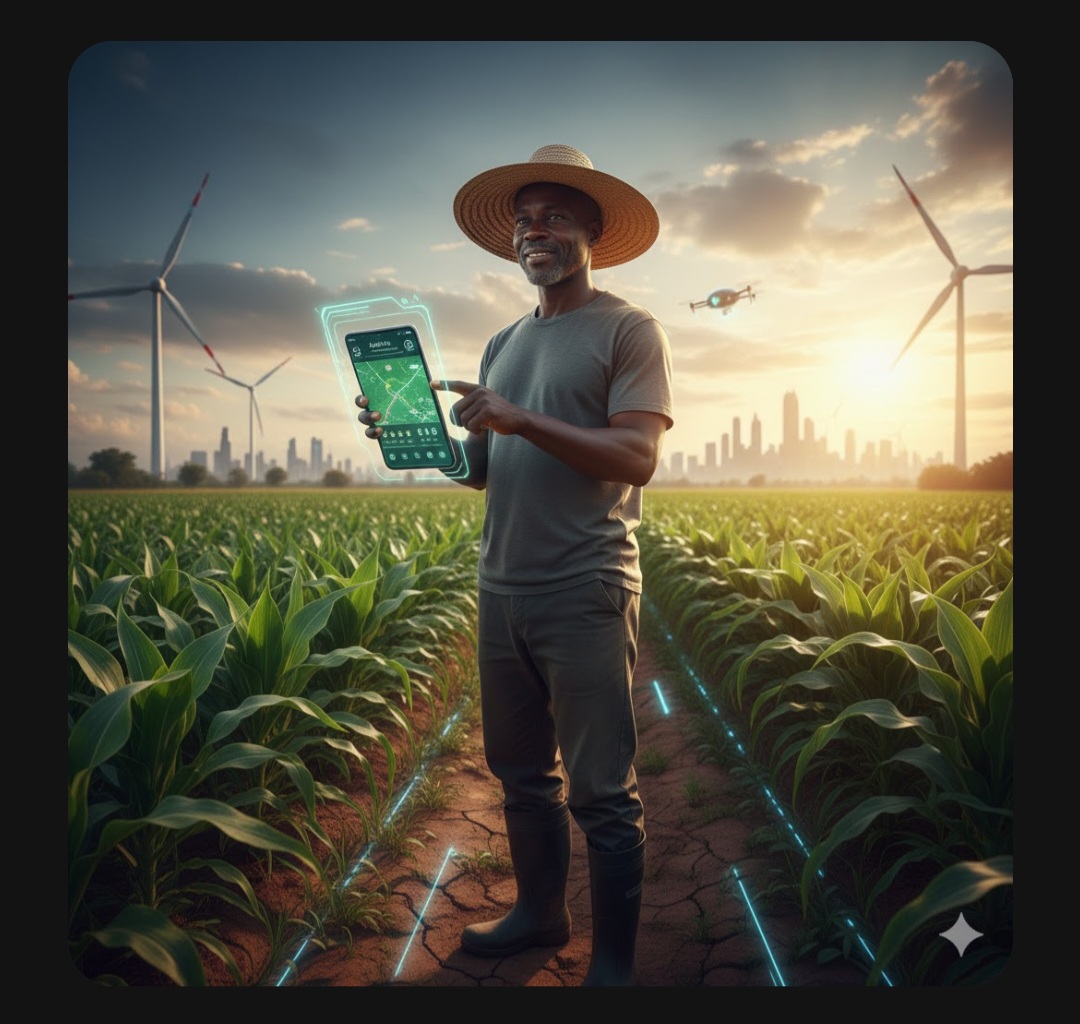
image of Nigerian farmer using smartphone AI app in field here
How Is Fintech Changing Financial Inclusion in Nigeria?
Here’s something that’ll blow your mind: Nigeria processes more mobile money transactions than most European countries. Not per capita—total transactions. Let that sink in for a moment.
The fintech trends Nigeria is experiencing aren’t just about making payments easier (though that’s part of it). They’re about fundamentally reimagining what financial services look like in a country where traditional banking has failed millions of people.
Walk through any Nigerian market—from the chaos of Balogun Market in Lagos to the ancient Kurmi Market in Kano—and you’ll see something remarkable. Traders who five years ago dealt exclusively in cash are now accepting transfers through platforms like Flutterwave and Paystack. The woman selling tomatoes on the street corner? She’s got a QR code printed on cardboard hanging from her stall.
But the real magic is happening at the intersection of fintech and inclusion. Take Kuda Bank, a digital-only bank with zero fees. For millions of Nigerians who couldn’t afford the minimum balances and service charges of traditional banks, Kuda has been revelatory. You can open an account in minutes using just your phone, with no paperwork, no branch visits, no bureaucratic nightmares.
OPay has taken this a step further, building an ecosystem that goes beyond just payments. You can transfer money, pay bills, order food, book rides, and even invest—all from one app. It’s like if PayPal, Uber, DoorDash, and Robinhood had a baby, and that baby understood exactly what Nigerian consumers needed.
The fraud detection fintech systems are equally impressive. With cyber threats evolving faster than a Lagos traffic jam grows, companies are deploying sophisticated machine learning models that analyze transaction patterns in microseconds. They’re catching fraudsters before the money leaves the account, using behavioral analysis that would make a psychologist jealous.
| Platform | Key Feature | Target Users | Monthly Active Users (Est.) |
|---|---|---|---|
| Flutterwave | Cross-border payments | Businesses & merchants | 8M+ |
| Paystack | Easy payment integration | SMEs & online businesses | 6M+ |
| Kuda Bank | Zero-fee banking | Young professionals & students | 5M+ |
| OPay | Multi-service ecosystem | Mass market consumers | 15M+ |
The mobile money trends are creating what economists call a “leapfrog effect.” Nigeria is skipping the phase where everyone has bank accounts and credit cards, jumping straight to a digital-first financial ecosystem. And honestly? It might just be better than what we have in the West.
Which Agritech Tools Will Boost Farming Yields Next Year?
Agriculture in Nigeria has always been a paradox. Here’s a country with some of the most fertile land in Africa, perfect for growing everything from cassava to cocoa, yet it imports billions of dollars worth of food annually. The problem was never the land or the farmers—it was the lack of modern tools and information.
Enter agritech Nigeria, and suddenly that paradox is starting to unravel.
The agritech innovations Nigeria is witnessing go way beyond “here’s a weather app for farmers.” We’re talking about precision agriculture Nigeria solutions that use satellite imagery, drone technology, and AI to give farmers insights that were previously available only to massive commercial operations in developed countries.
Farmcrowdy has pioneered a model that’s part crowdfunding platform, part agricultural management system. Urban investors can fund farming projects, while farmers get access to capital, training, and modern farming techniques. The platform uses data analytics to match farmers with the most suitable crops for their land and connects them with markets for their produce. It’s democratizing agriculture in a way that seemed impossible just a few years ago.
Drone technology is mapping farmland with centimeter-level precision, identifying areas that need more water, detecting pest infestations before they’re visible to the human eye, and optimizing the use of expensive fertilizers. A farmer in Plateau State can now use crop monitoring drones to survey hundreds of acres in hours—work that would have taken days on foot.
The blockchain agriculture Nigeria applications are tackling supply chain transparency. Consumers can scan a QR code on produce and see exactly where it came from, when it was harvested, and how it got to the market. This isn’t just about food safety—it’s about building trust and allowing farmers to get fair prices by cutting out exploitative middlemen.
Voice recognition African languages technology is particularly exciting. Many Nigerian farmers aren’t literate or don’t speak English fluently. AI systems like Indegenius that can understand and respond in local languages like Yoruba, Igbo, and Hausa are making agricultural information accessible to millions who were previously excluded from the digital revolution.
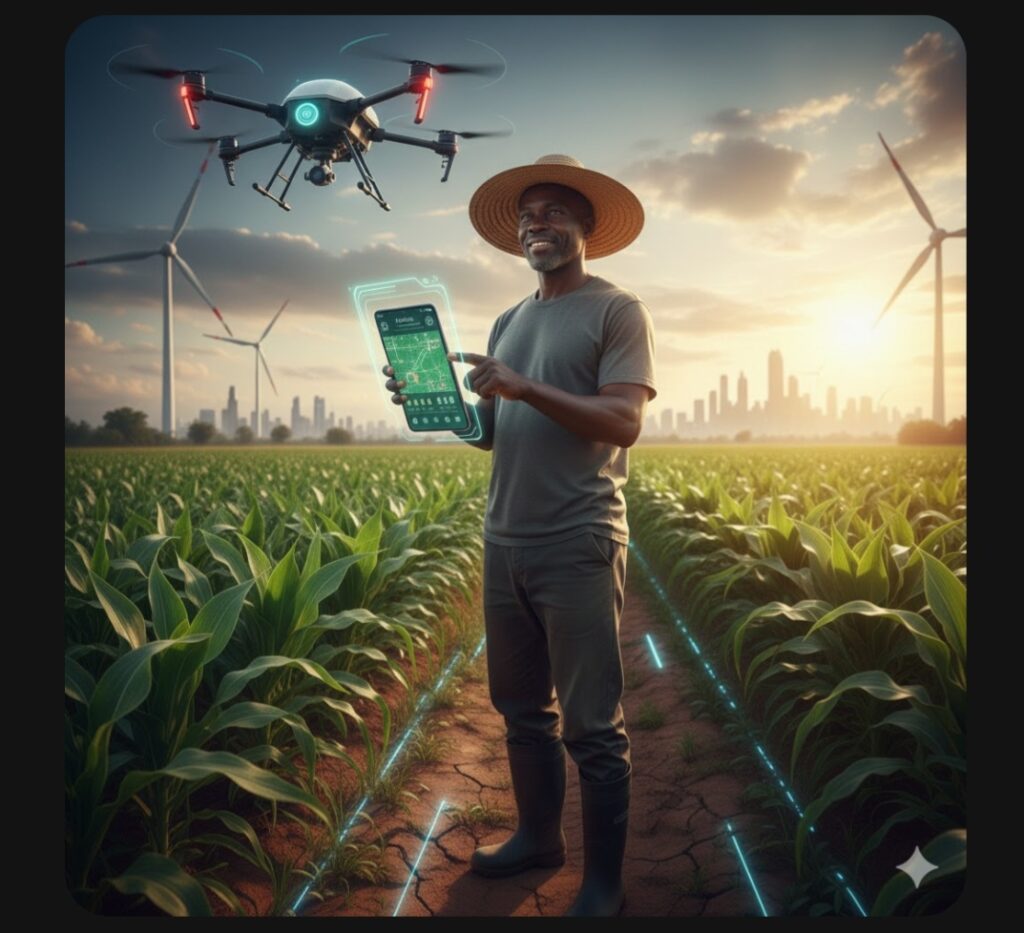
Image of drone flying over Nigerian farmland with farmer observing tablet here
What New Tech Hubs Are Emerging Outside Lagos?
Look, Lagos gets all the attention. It’s Nigeria’s New York—the city that never sleeps, where fortunes are made and lost before breakfast. The Lagos innovation clusters are impressive, no doubt. But if you think that’s the whole story of tech hubs Nigeria, you’re missing the plot entirely.
Abuja AI startups are multiplying like rabbits on espresso. The capital city, with its relatively better infrastructure and proximity to government institutions, has become a magnet for companies working on govtech solutions, cybersecurity Nigeria projects, and enterprise software. There’s less hustle-and-bustle chaos than Lagos, which appeals to founders who want to focus on building rather than navigating traffic.
But here’s where it gets really interesting: secondary cities are getting in on the action. Ilorin, a mid-sized city that most international observers have never heard of, is developing its own innovation ecosystem. The Ilorin Innovation Hub is grooming emerging tech pioneers, providing workspace, mentorship, and connections to funding. It’s proof that you don’t need to be in a megacity to build something meaningful.
Port Harcourt, historically known for oil and gas, is diversifying into tech. Enugu is positioning itself as a hub for edtech adaptive learning platforms. Even smaller cities like Uyo and Calabar are seeing the emergence of tech communities, coding bootcamps, and startup incubators.
This geographic diversification matters for several reasons. First, it spreads opportunity beyond the usual coastal elite centers. Second, it taps into different regional strengths—northern Nigeria’s agricultural expertise, the southeast’s manufacturing tradition, the south-south’s energy sector knowledge. Third, it reduces the pressure on Lagos’s already groaning infrastructure.
The tech hubs Nigeria landscape in 2026 looks less like a single star and more like a constellation—each point of light contributing to a brighter whole.
How Will 5G Impact Nigerian Businesses in 2026?
The 5G Nigeria rollout has been slower than molasses in January, but when it finally started gaining traction in late 2025, the impact was immediate and transformative.
First, let’s talk about what 5G actually means in the Nigerian context. It’s not just about downloading movies faster (though that’s nice). It’s about enabling technologies that simply couldn’t exist on 4G networks. Think real-time telemedicine consultations with high-definition video that doesn’t freeze every three seconds. Think IoT smart grids Nigeria that can monitor and adjust power distribution across entire neighborhoods to prevent blackouts. Think autonomous delivery vehicles navigating Lagos traffic using real-time data processing.
For businesses, 5G is opening doors that were previously welded shut. Cloud computing Nigeria is becoming genuinely viable for companies that need to process large amounts of data. Before 5G, migrating Nigerian SMEs to the cloud was more aspiration than reality—the internet speeds just couldn’t handle the workload. Now, small businesses can access computing power and sophisticated software that was previously affordable only to large corporations.
The logistics optimization AI applications are particularly exciting. Nigeria’s logistics sector has always been handicapped by poor roads, unreliable power, and lack of real-time tracking. With 5G enabling IoT sensors and AI processing, companies can now track shipments with precision, optimize routes in real-time, and provide customers with accurate delivery windows. It’s not quite Amazon Prime level yet, but it’s getting there faster than anyone expected.
E–commerce Nigeria platforms are leveraging 5G to create immersive shopping experiences. Augmented reality apps that let you see how furniture would look in your living room, virtual try-ons for clothes, live-streaming shopping events with interactive features—the social commerce TikTok Nigeria trend is exploding because the infrastructure can finally support it.
image of 5G tower in Nigerian urban setting with modern buildings here
What Cybersecurity Threats Face Nigerian Startups?
Here’s the uncomfortable truth: as Nigeria’s digital economy grows, so does its appeal to cybercriminals. The cybersecurity trends Nigeria is experiencing aren’t all positive—there’s a constant arms race between innovators and those who want to exploit the digital infrastructure.
Nigerian startups face a perfect storm of security challenges. They’re handling more data than ever before, much of it sensitive financial or personal information. They’re operating in an environment where cybersecurity expertise is scarce and expensive. And they’re attractive targets precisely because they’re often under-protected compared to larger, more established companies.
The most common threats include:
-
- Phishing and social engineering attacks that exploit the human element of security
-
- Ransomware targeting companies with valuable data but weak backup systems
-
- API vulnerabilities in fintech applications that handle millions in transactions daily
-
- Insider threats from employees with access to sensitive systems
-
- DDoS attacks aimed at disrupting services during crucial business periods
But here’s the silver lining: the cybersecurity Nigeria ecosystem is responding with innovation that matches the threats. Startups are emerging that specialize in providing affordable security solutions tailored to Nigerian businesses. They understand the local context, the resource constraints, and the specific threat landscape in ways that foreign security companies never could.
Machine learning Nigeria applications are being deployed to detect anomalies in network traffic, identify suspicious login patterns, and flag potential breaches before they cause damage. It’s reactive security becoming proactive defense.
Are There AI Solutions for Nigerian Healthcare Gaps?
The healthtech Nigeria 2026 landscape is where technology meets urgent human need, and the results are genuinely life-changing.
Nigeria has roughly one doctor for every 5,000 people—compared to one for every 400 in the United States. Most healthcare facilities are concentrated in urban areas, leaving rural populations with minimal access to quality medical care. Into this gap has stepped a new generation of telemedicine platforms Nigeria solutions powered by AI.
Docly and similar telemedicine platforms are not just video call apps with a medical twist. They’re sophisticated systems that use AI to triage patients, suggest preliminary diagnoses, and determine the urgency of medical intervention. A patient in a village can describe symptoms to an AI chatbot that asks clarifying questions, checks against a massive medical database, and then connects them with a human doctor for confirmation and treatment planning.
The healthtech telemedicine Nigeria sector is also tackling medication adherence, a massive problem in chronic disease management. AI-powered apps send reminders, track medication schedules, and alert healthcare providers if patients are missing doses. For conditions like diabetes and hypertension—which affect millions of Nigerians—this technology is literally saving lives.
Mental health, long stigmatized and under-resourced in Nigeria, is getting a boost from AI-powered therapy apps and chatbots that provide initial counseling and connect users with human therapists when needed. It’s not replacing traditional therapy, but it’s providing a crucial first step for people who might never have sought help otherwise.
| Healthcare Challenge | AI/Tech Solution | Impact |
|---|---|---|
| Doctor shortage in rural areas | Telemedicine + AI triage | Millions gain access to medical advice |
| Diagnostic accuracy | AI-assisted diagnosis from symptoms/images | Earlier detection of diseases |
| Medication adherence | Smart reminders and monitoring | Better chronic disease management |
| Mental health stigma | Anonymous AI counseling chatbots | Lower barrier to seeking help |
| Medical records fragmentation | Cloud-based health records | Continuity of care across providers |
How Can SMEs Adopt Digital Advertising Trends?
Let’s talk about something that keeps Nigerian business owners up at night: how to compete in an increasingly digital marketplace without the massive marketing budgets of big corporations.
The digital advertising Nigeria landscape in 2026 is dominated by AI-powered targeting and social commerce, and the good news is that these tools are becoming accessible to even the smallest businesses.
AI-powered ads targeting Nigerian consumers has evolved beyond the simple demographic targeting of yesteryear. Now, platforms analyze behavior patterns, purchasing history, social media engagement, and even seasonal trends to identify the exact people most likely to buy your product. A small fashion boutique in Ibadan can target young professionals in Lagos who recently got promoted and have shown interest in similar products—with the precision that would have required a massive
marketing team just five years ago.
The social commerce boom on Instagram and TikTok has created entirely new sales channels that favor creativity and authenticity over big budgets. A food vendor can build a following by posting engaging content showing their cooking process, responding to comments, and selling directly through the platform. No need for a fancy website, no need for expensive e-commerce infrastructure—just a smartphone and the willingness to engage with customers.
Jumia, Nigeria’s largest e-commerce platform, has become a crucial partner for SMEs looking to reach wider audiences. But what’s interesting is how they’ve integrated social features, turning shopping into a community experience rather than a transactional one.
Mobile-first advertising is non-negotiable in Nigeria, where the vast majority of internet users access the web primarily through smartphones. SMEs that optimize their digital presence for mobile—fast-loading pages, easy navigation, simple checkout processes—are crushing it compared to those still thinking in desktop-first terms.

Image of Nigerian SME owner managing social media campaigns on smartphone here
What Edtech Innovations Are Trending in Nigeria?
Education in Nigeria is simultaneously the country’s greatest hope and its most frustrating challenge. With a young population eager to learn but a system struggling with overcrowding, outdated curricula, and limited resources, edtech platforms Nigeria are stepping into the breach with solutions that are as innovative as they are necessary.
The edtech adaptive learning trend is personalizing education in ways that traditional classroom settings never could. Apps that adjust difficulty based on student performance, identify knowledge gaps, and provide targeted practice are helping students learn more effectively. A student weak in algebra but strong in geometry gets more algebra practice, with explanations tailored to their learning style.
Tecno tablets and affordable devices from companies like HP are making technology-enabled learning accessible to families who could never afford premium laptops. These aren’t top-of-the-line devices, but they’re good enough to run educational software, access online resources, and participate in remote learning.
The pandemic permanently changed attitudes toward online education in Nigeria. What was once seen as inferior to in-person instruction is now recognized as a valuable alternative—especially for students in remote areas or those balancing education with work responsibilities. Universities and training programs are creating hybrid models that combine the best of both worlds.
Coding bootcamps and tech skills training programs are proliferating, responding to the massive demand for machine learning jobs Nigeria and other tech positions. Young Nigerians are learning Python, JavaScript, and data science skills that can lead to remote jobs with international companies, bringing foreign currency into the economy while building local expertise.
Which Cleantech Products Solve Nigeria’s Energy Issues?
If you want to understand Nigeria’s potential and its challenges in one issue, look at power. Africa’s largest economy has an installed electricity generation capacity lower than that of Portugal, a country with 5% of Nigeria’s population. Rolling blackouts are so common they’re called “NEPA takes light” as casually as you’d mention rain.
But renewable energy tech Nigeria and solar energy tech solutions are changing the game, one rooftop and one village at a time.
Renewvia and other cleantech startups aren’t waiting for the national grid to get fixed. They’re building distributed solar mini-grids that power communities independently. These aren’t expensive, complicated systems—they’re modular, affordable solutions that can be installed quickly and scaled as needed.
For urban residents and businesses, solar kits are becoming standard equipment. A setup with solar panels, battery storage, and an inverter can keep essential appliances running even when the grid fails. Yes, there’s upfront cost, but when you factor in the money saved on diesel generators and lost productivity from power outages, the ROI is compelling.
The cleantech energy solutions are also addressing the environmental impact of Nigeria’s current power generation, which relies heavily on fossil fuels and produces massive carbon emissions. Solar and wind projects are not just good for the economy—they’re essential for the planet.
IoT driving energy efficiency in Nigeria through smart grids is still in early stages, but pilot projects are showing massive potential. Imagine a power distribution system that automatically balances load, routes electricity to where it’s needed most, and prevents overloads that cause blackouts. That’s not science fiction—it’s being tested in select neighborhoods right now.
The Bottom Line: Nigeria’s Tech Future Is Now
Here’s what you need to understand: Nigeria isn’t preparing for a digital future. It’s living it right now, in real-time, with all the messy, chaotic, brilliant innovation that comes with being at the forefront of technological change.
The startup funding Nigeria 2026 ecosystem is maturing, with more sophisticated investors recognizing that African tech isn’t a charity case or an exotic investment—it’s a genuine opportunity with returns that can rival anything coming out of Silicon Valley. International VCs are opening Lagos offices. Local funds are getting bigger and smarter. The money is following the talent and the ideas.
But more important than the funding is the mindset shift. Young Nigerians no longer see technology as something imported from abroad. They’re building tools, platforms, and businesses that solve African problems in African ways. They’re not trying to be the “Uber of Nigeria” or the “Amazon of Africa”—they’re creating entirely new categories that the West will eventually try to copy.
The infrastructure challenges remain—power is still unreliable, internet connectivity is spotty in many areas, regulatory frameworks lag behind innovation. But these obstacles are increasingly seen as problems to solve rather than excuses for inaction.
Where Do We Go From Here?
If you’re an investor, Nigeria should be on your radar not as a risky frontier market but as a growth opportunity you can’t afford to miss. If you’re a tech professional, consider how your skills could contribute to solving real problems for millions of people. If you’re just someone interested in the future of technology, keep your eyes on Nigeria—the innovations emerging here are going to influence global tech trends for years to come.
The key products and platforms I’ve mentioned—Flutterwave, Paystack, Kuda Bank, OPay, Farmcrowdy, Docly, Indegenius, and dozens of others—are just the beginning. They’re proof of concept. They’re showing that with the right combination of technology, local knowledge, and determination, you can build solutions that work in challenging environments and create genuine value for users.
So yeah, Nigeria 2026 is where innovation meets necessity, where young entrepreneurs are building billion-dollar companies from internet cafés and co-working spaces, where farmers are using AI and city dwellers are banking without banks. It’s chaotic and brilliant and frustrating and inspiring all at once.
And honestly? I wouldn’t want to be anywhere else right now. The future of technology isn’t just being written in Silicon Valley or Shenzhen anymore. It’s being coded in Lagos, designed in Abuja, and deployed across a continent that’s tired of waiting for permission to innovate.
Welcome to the party. It’s just getting started !!!